A restaurant business plan is the foundation of every successful restaurant. It clarifies your idea and explains how the business will operate and generate profits.
Whether you’re just starting or close to opening a restaurant, a solid business plan for your restaurant can help you make the right decisions. It covers everything from the menu and location to staff, marketing, and finances.
Most restaurant owners refer to their plan repeatedly. It helps them grow as their business scales and helps them avoid risks.
A strong restaurant business plan gives you these benefits:

- Transforms restaurant ideas into a clear and actionable plan
- Increases your chances of success through better planning
- Helps you identify potential problems in advance
- Helps you gain the trust of investors
Restaurant Business Plan Introduction and Definition
The restaurant business plan introduction sets the direction for your restaurant journey. This plan guides you through every stage, from startup to long-term sustainability. Whether you’re planning a menu or looking for investors, this document keeps you focused.
A restaurant business plan explains what you want to build, how the restaurant will operate, and how to make a profit. This clarity is essential for any restaurant startup business plan.
An effective business plan for restaurant owners provides a practical roadmap. It organizes ideas, evaluates opportunities, and helps you plan resources properly. Investors want to see it because it shows preparation and seriousness.
Industry experts agree that a business plan helps keep goals focused and decisions aligned. Beyond defining your concept, a business plan plays a critical role in execution and funding.
Why Is a Restaurant Business Plan Important?
A clear restaurant business plan turns an idea into a workable path. It explains how the restaurant will start, run, and make a profit. When you’re confused about licensing, construction, staffing, and expenses, it’s the plan that keeps you on track. Part of running a profitable operation is choosing the right tools, such as a reliable restaurant POS system to streamline orders, payments, and inventory
A restaurant startup business plan is most important for raising capital. Most investors won’t invest without a plan. They want to see that you understand the costs, risks, and returns.
The plan also tells you where your restaurant stands in the market. What are your strengths and weaknesses? Without a plan, the risk of failure increases. The hard work you put in up front can save you from big losses later.
- Earns investor confidence
- Creates a clear path to profitability and growth
- Reduces risks
- Long-term goals are clear
Basic Components of a Restaurant Business Plan
The list of components of an effective restaurant business plan always starts with a clear structure. Whether it’s your first plan or your tenth, using a restaurant-specific template can help you avoid mistakes.
A good plan reflects your brand, goals, and operations. It also shows investors and lenders that you understand the business side of things.
Most restaurant business plans include these basic sections:
- Executive Summary
- Company Description
- Market Analysis
- SWOT Analysis
- Menu and Sourcing Details
- Marketing Strategy
- Target Market Definition
- Branding Overview
- Organisation and Management
- Financial Plan
- Legal and Compliance Considerations
A plan with clear components is easier to create. It’s also easier to update. And it makes it more organized to turn your idea into reality.
Executive Summary
The executive summary is the beginning of your business plan and is often the first to be read. In most restaurant plan examples, this section is the one that decides whether the reader will move forward or not.
This section provides a brief but clear summary of your restaurant idea. A strong business plan sample executive summary clarifies the vision, concept, and reason for success.
Here, it is important to answer one fundamental question: Why does your restaurant deserve to exist in this market?
This section typically includes:
- A brief introduction to the restaurant concept
- The mission statement and core values
- Cuisine type and overall experience
- How the plan will be executed
- High-level cost overview
- Expected return on investment
The executive summary should be short. It should be clear. This section sets the direction for the entire business plan.
Company Description / Business Overview
The company description explains what your restaurant is and how it will operate. This section of every strong business plan for a restaurant clarifies the business model.
Start with the basics. Describe the restaurant’s name, location, ownership, and legal status. Then, explain the concept and types of cuisine. An effective restaurant startup business plan shows its purpose here.
Describe the experience you want to give customers. Include menu style, service method, and target market. Explain where the restaurant fits into the local market.
This section should also address day-to-day operations. Include layout, seating capacity, and hours of operation. If staff culture is important, also describe a strategy for building a good team.
Finally, clarify your brand identity. Discuss the design, atmosphere, and values. Show that everything is connected to a clear vision.
Market Research for Restaurant Business Plan
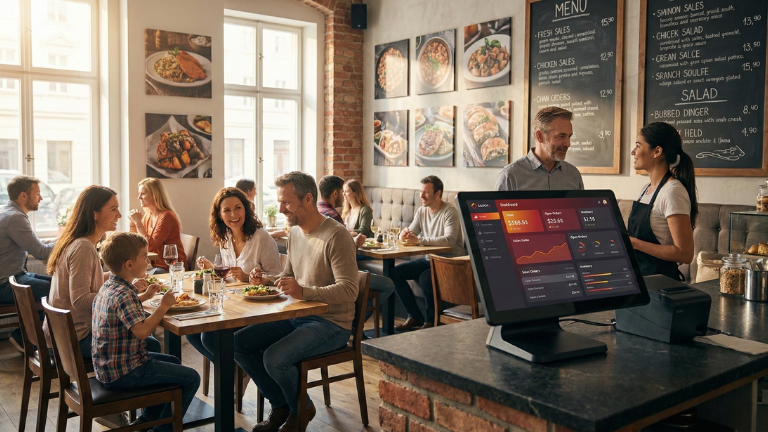
Strong market research for a restaurant plan proves that you didn’t decide without understanding the market. This section explains where your restaurant fits in and why it can succeed.
Market research typically consists of three parts: Industry, competition, and location. These three define the risks and opportunities.
Industry Analysis:
Industry analysis describes current restaurant industry trends and the overall dining market. Focus on consumer behavior, spending habits, and food trends. Include local economics, supply conditions, and demand. It demonstrates that your concept aligns with the market.
Competitive Analysis:
This section analyzes nearby local competitors. Look at similar restaurants, their prices, and service styles. Explain their strengths and weaknesses. Clear market positioning helps investors understand the difference.
Geographic / Location Analysis:
This analysis describes the importance of location, including foot traffic, nearby offices, residential areas, and accessibility. Describe key demographics such as age, income, and dining habits. Demonstrates that the location and target customers are a good match.
SWOT Analysis
A SWOT analysis presents your restaurant’s strengths, weaknesses, opportunities, and threats systematically. This section strengthens a business plan example because it shows that your plan is based on realistic thinking, not just guesswork.
This analysis is effective when it is honest. No restaurant is perfect in every way. A strong SWOT analysis highlights where your team or resources may be weak and how you can improve them over time. It also highlights opportunities and threats that are related to the market or competition, which increases investor confidence and allows for better preparation.
What to include:
- Strengths: Describe the things that make you better than others. Also, explain how you will use them.
- Weaknesses: Identify skills or resource deficiencies. Show a path to improvement.
- Opportunities: Identify market gaps, growing trends, or local demand.
Threats: Acknowledge competition, rising costs, or market pressures. Explain how you will address them.
A clear and honest SWOT analysis builds confidence and helps you make better decisions.
Menu Planning and Sourcing
The menu identifies your restaurant. Whether it’s a fast food business plan, a fine dining restaurant plan, or a breakfast restaurant business plan, the menu is the first thing investors look at. Dish names alone aren’t enough. Include clear descriptions that capture the flavors and styles and clarify the direction of the brand.
Pricing is important from the start. Prices in a sample menu should reflect cost research. This gives investors a sense of your concept and profitability. Testing the menu first helps avoid unnecessary costs and proves that there is demand in the market.
Sourcing explains where the food will come from. Mention suppliers, vendors, and any local or environmentally friendly sources. Include stock management, food waste, and safety practices. All of these things indicate a strong and viable plan.
Restaurant Design and Layout

The design section shows how your restaurant will look and operate. This is where investors understand your vision in a restaurant startup business plan. If professional drawings are not available, a clear mood board will suffice. Images should convey the desired atmosphere and service style.
Design is not just about aesthetics. It also includes the layout, kitchen equipment, service areas, and technology used. Every decision should improve the service experience. Speed is essential for fast counter service, while flow is essential for full-service dining. Good design makes a difference for both the operation and the guest.
Staffing and Employees Plan
This section explains who will run the restaurant on a day-to-day basis. Investors in small restaurant plan examples pay particular attention to the management team. A complete staff list is not necessary, but it is important to outline the key people.
Highlight the experience, character, and personal values of the owners and managers. Show how their backgrounds strengthen the restaurant concept and operations. A strong team builds confidence, reduces risk, and shows that the business has the people needed to execute the plan successfully.
Operations and Management Plan
This section provides a complete overview of the day-to-day operations and brings together all the key restaurant plan components in one place. It includes front-of-house and back-of-house rules, hiring standards, and salary structures to ensure operational readiness. Customer service policies outline how to provide a consistent experience for every guest. Daily operations will be driven by the restaurant’s point of sale system, which will manage sales, inventory, payroll, and payments. Finally, supplier management is included to ensure that the quality of ingredients, equipment, and stock is maintained.
1. Staffing
The operations plan outlines the day-to-day operations. First, describe staffing: Include key positions, the number of staff for each role, and recruitment methods. How will you attract good employees, offer fair compensation, and create a positive work culture?
2. Customer service policies and procedures
Next, describe customer service policies. Clarify the quality of the guest experience and how you will maintain it. Discuss customer service standards and their implementation.
3. Restaurant point of sale and other systems like payroll
Discuss point-of-sale systems. How will you manage sales, inventory, payroll, and payments? Include ways to improve operations through the use of technology.
4. Suppliers
Finally, focus on suppliers. Where will you source ingredients and kitchen equipment? Describe relationships with suppliers to ensure quality, consistent, and sustainable supply.
Restaurant Marketing Strategy
This section explains how the restaurant will attract customers before and after opening. It includes positioning, target audience, branding, and the practical methods that actually generate traffic and repeat visits. All strategies are connected to market research and the concept of the restaurant.
Positioning Statement
The positioning statement explains how the restaurant is different from others. It includes a clear value proposition, market category, and the core message that should reach each customer. This is the foundation of strong brand positioning.
Target Market Definition
This section identifies ideal customers through detailed customer personas. Accurate audience segmentation is done based on age, income, eating habits, and preferences so that the right channels and messages are selected.
Branding Strategy
Branding is not limited to a logo. Restaurant brand identity includes the personality, style, language, and feelings that customers associate with the restaurant. These same elements are also reflected in the online presence and interior design.
Traffic-boosting marketing
Effective promotions and targeted local marketing are used to bring in customers. This can include soft openings, special offers, local partnerships, loyalty programs, and social or email campaigns. Each activity is evaluated to focus on effective strategies.
Financial Plan and Projections
A financial plan explains how the restaurant will raise funding in the first year and how it will be used effectively. Investors pay special attention to this section because it is the foundation for profitability and sustainability.
1. Investment Plan
This section details the initial investment and its use, such as kitchen equipment, furniture, staff salaries, legal expenses, marketing, and working capital.
2. Projected Profit and Loss
The first-year P&L provides an estimate of sales, food costs, labor, and other expenses. A strong small business plan example is based on realistic numbers.
3. Break-even Analysis
It shows how much revenue is needed per month to cover all expenses, especially during slow months.
4. Cash Flow
Cash flow projections take into account inventory, payroll, and seasonal changes, giving investors confidence that the business can sustain itself.
How to Present a Restaurant Business Plan
Once your business plan for your restaurant is complete, learn it inside out. Investors expect you to communicate confidently and clearly. You should know every section and how it connects to your vision.
Share your business plan with your network via email first. If interest increases, be prepared to meet. Investors often ask for a presentation along with the written plan. Create a simple and clear pitch deck in PowerPoint or Google Slides. Practice until you can present without notes.
Choose the right format for your presentation carefully. It is easier to share a digital plan. A printed copy makes a better impression in a face-to-face meeting. In both cases, the layout should be clean and professional.
Be prepared for questions. Some will be expected and some will be spontaneous. If a question is not answered immediately, promise to tell you later. Highlight your management values, experience, and vision. Investors invest in people, not just ideas.
Key Takeaways
- An effective restaurant business is not limited to a set format. You can add or remove sections as needed, as long as your vision, strategy, and path to profitability are clear.
- The real value of a business plan is guidance. It keeps you on track as an owner, explains your vision to investors and lenders, and ties decisions to your long-term goals.
- Your business plan shouldn’t be static. As your restaurant grows, keep updating it so that it keeps pace with changing circumstances and new opportunities.
A business plan gives your concept a clear direction. It convinces investors, strengthens the plan, and shows a clear path to profitability. It is essential for starting a new restaurant.
Start with a template made for a restaurant. Research the market and customers. Make your plan clear and effective with the help of a restaurant plan example.
The most important thing is a clear plan. Passion is essential, but the business plan for a restaurant defines the concept, target market, financial strategy, and operations.
Start with little capital. Choose a food type, test the idea, create a simple plan, build a brand, start selling online, and gradually expand.
Most business plans are 15 to 20 pages long. They include goals, operations, resources, and a strategy for success.
Yes. It is difficult to get capital or loans without a business plan. It is also essential for running a restaurant and keeping costs under control.
Estimate your income based on market research. List your fixed and variable expenses. Set aside money for emergencies. Review your budget regularly.